In autumn 2025 and early 2026, WISE partners implemented training activities to build the capacities of energy solidarity volunteers across diverse country and cultural contexts. The sessions sought to equip participants with theoretical knowledge, practical skills and interpersonal communications skills to support women affected by energy poverty. The training fostered a deeper understanding of the gendered dimensions of energy poverty and prepared participants for their roles in WP6 (Energy and Related Rights Workshops for Single Women) and WP7 (Energy Solidarity Days).
Addressing energy poverty requires coordinated action across multiple levels and sectors. Volunteer-based initiatives provide an important entry point for community engagement and immediate support; their effectiveness is strengthened when embedded within a broader ecosystem of actors, each contributing according to their role and capacity.
A key output, the WISE Energy Solidarity Toolkit aims to equip civil society organisations (CSOs), local authorities, community initiatives, and other actors with practical tools to train volunteers for energy solidarity actions addressing women’s energy poverty. It is designed to be used in preparation for training volunteers who will engage in activities such as workshops, outreach, and Energy Solidarity Days, as well as in broader community-based programs focused on energy literacy and support for vulnerable households.
By following the guidance provided in this document, organisations will be able to:
design and deliver structured volunteer training programmes,
prepare volunteers for field engagement, and
ensure that support is delivered in a manner that is accessible, ethical, and adapted to local realities.
The Toolkit is flexible and can be tailored to different contexts, target groups, and institutional settings, while maintaining a shared core approach grounded in solidarity, inclusiveness, and practical action.
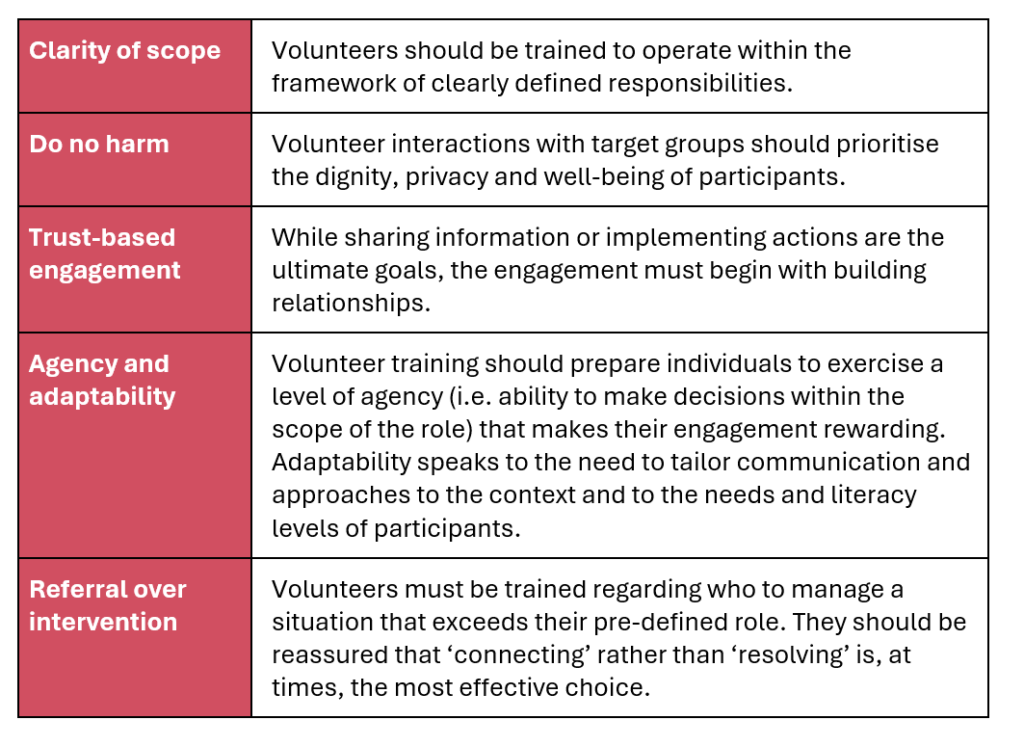
Five guiding principles for volunteer action
Across countries, WISE volunteer training was tailored to local contexts
In Bulgaria, volunteer training was organised to be preparatory and empowering, strengthening participants’ understanding of energy poverty and its links to broader social and economic inequalities affecting women. After introducing the project and its prior activities (including 8 March mobilisation in Plovdiv), discussion focused on the local context.
In Croatia, a “Student Volunteer Training” was organised in January 2026 in cooperation with the Chair of Social Policy, University of Zagreb. It targeted university students interested in volunteering in the fields of energy poverty, social policy, and social justice. It combined theoretical inputs on the national energy system, housing conditions, and policy frameworks with practical guidance on household-level energy efficiency measures and energy rights.
In France, volunteer training was conducted across two events, introducing participants to the concept of energy precarity and its measurement at EU and national levels, as well as contributing factors. Testimonies from women experiencing energy precarity in Aubervilliers highlighted the impact of poor housing conditions, particularly in the rental sector.
In Greece, INZEB and Wind of Renewal organised two training sessions (February 2026). The first introduced key concepts such as energy vulnerability, energy rights, and practical tips to reduce energy consumption. It also provided guidance on communicating with vulnerable groups. The second workshop was hosted by the Parents and Guardians Association of an elementary school, targeting residents of a largely low-income neighbourhood. It featured a presentation on energy poverty and its disproportionate impact on single women.
In Hungary, CSS co-organised three trainings with the Faculty of Social Sciences in November 2025, engaging 50 participants, primarily social science students at BA, MA and PhD levels. The sessions focused on the gendered dimensions of energy poverty within the Hungarian context and explored its intersections with housing, health, education and care responsibilities. Through persona-based activities grounded in real-life experiences of single mothers, participants examined societal and policy-level responses to energy vulnerability.
In Italy, training sessions adopted a comprehensive approach to understanding the energy market. Participants engaged with practical materials such as their own energy bills and offers from different energy suppliers. This enabled them to develop the skills needed to interpret costs and assess energy offers. The workshops highlighted the importance of equipping volunteers with tools to respond effectively to the needs of vulnerable individuals.
In the Netherlands, training focused on empowering (female) students with knowledge on energy rights, housing rights and practical energy-saving measures. It combined awareness-raising on gender and energy poverty – drawing on data, student experiences and earlier WISE activities – with preparation for outreach. Contributions from local stakeholders, including the Groningen City Council and community energy initiatives, highlighted existing gaps in reaching vulnerable student groups. It also addressed barriers faced by international students, such as language, limited knowledge of rights, and insecure housing conditions, equipping participants to effectively support and engage their peers through tailored, accessible approaches.
The Orion Grid amplifies change by bringing together the energy of the bearers of the democratic impulse. It works through educational, consultative, artistic, public and other interventions.